
What Does the Celtic Knot Pattern Mean? The Origins of Its Use as an Amulet for Warding Off Evil, Protection, and Eternal Bonds
What Is the Celtic Knot Pattern? A Knot Symbolizing Eternity, Bonds, and Protection

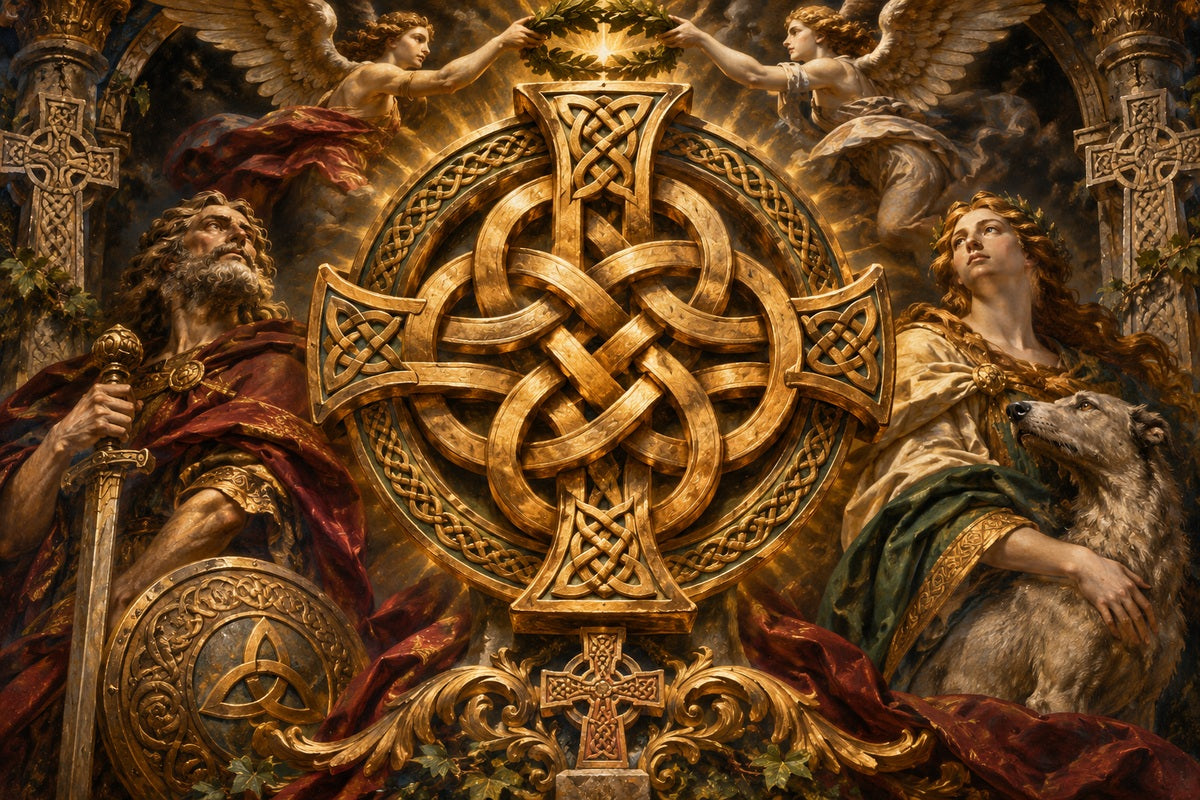
The Celtic knot pattern (Celtic Knot) is a decorative motif consisting of multiple lines that intersect and continue as if woven together.
Also known as a Celtic knot, it is now widely used in rings, pendants, bracelets, and other items as a motif symbolizing "eternity," "bonds," and "protection."
Its defining feature is its complex structure, in which lines intersect to form a single pattern with no apparent beginning or end.
In modern jewelry, the unbroken lines are often associated with eternal connection, while the intricate knots are incorporated as symbols of protection.
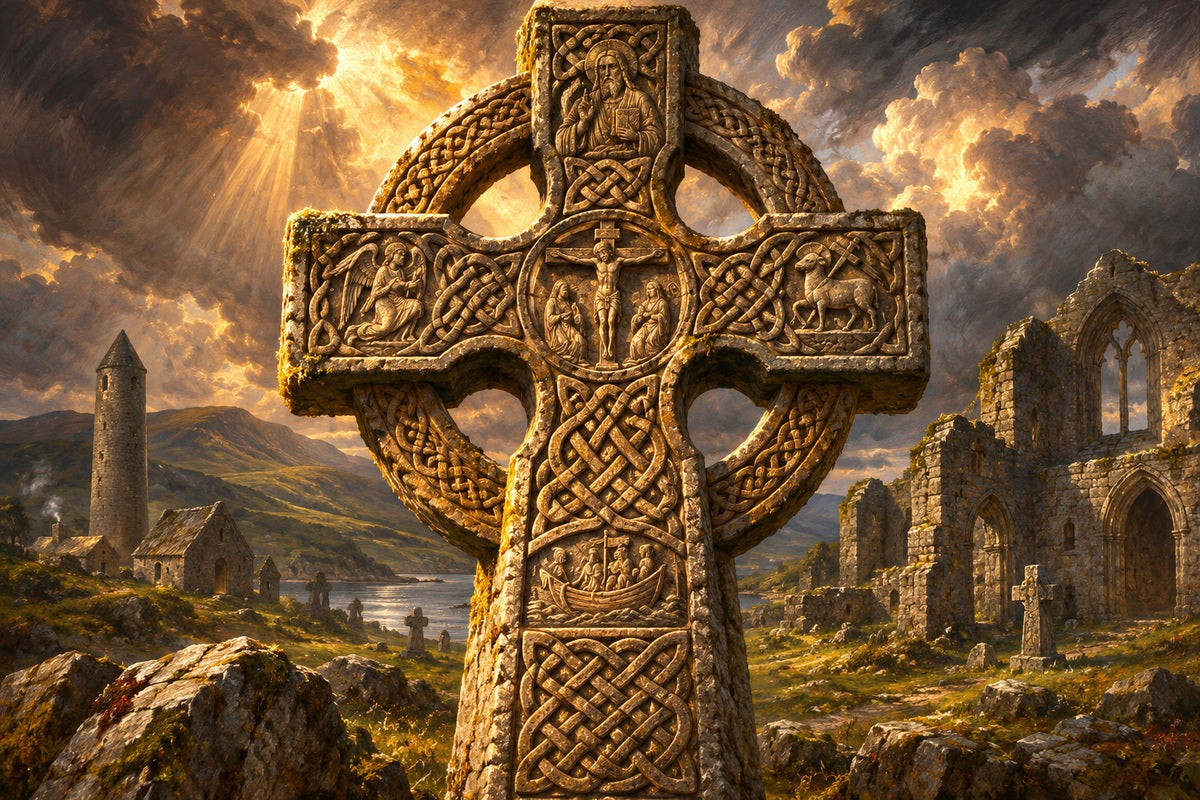
This knot decoration can also be found on many religious artifacts, stone carvings, and manuscripts created in medieval Ireland and Scotland.
Particularly interesting is the relationship between knot patterns and protection from evil. In medieval art, there are examples of intricate knots being associated with the idea of warding off evil forces, and artifacts have been discovered that may have been used as amulets.
The Meanings Embodied in the Celtic Knot Pattern
The Celtic knot is a popular motif that expresses various meanings through the connection of lines and the shape of the knots.
The representative meanings used in modern jewelry and decorative items are as follows:
- Eternity: The unbroken lines represent endless time and permanence.
- Bonds: The way multiple lines are tied together symbolizes the connection between people.
- Protection: The knots and intersecting lines are viewed as symbols that protect against evil forces.
- Harmony: The regular intersection of complex lines represents balance and unity.
- Faith: In medieval Christian art, decorations combining crosses and knots were created.
Why an Endless Knot Symbolizes Eternity
Some Celtic knots feature a single line that repeatedly intersects itself to form a single figure.
Because the lines are unbroken, the pattern has become popular as a reminder of endless time and unchanging relationships.
Today, it is also used to convey the meaning of wedding rings and matching jewelry for couples.
Why a Knot Represents the Bonds Between People
Knots, in which multiple lines intersect to form a single shape, are also used to express the connections between people.
This is why they are chosen for jewelry symbolizing bonds with loved ones such as family, partners, and friends.
From simple knots where two lines intersect to complex patterns with multiple interwoven lines, connections can be expressed in a variety of ways.

Were Celtic Knot Patterns Used as Wards Against Evil or Amulets?
When studying Celtic knots, their relationship with protection from evil and amulets is particularly noteworthy.
In medieval Europe, knots and intersecting lines were sometimes used as symbols to protect against evil forces.
The Idea That Knots Ward Off Evil Forces
The Swedish History Museum explains that knot patterns on medieval baptismal fonts and other items were intended to ward off or bind evil forces.
Knots were given the symbolic meaning of restraining evil forces.
The idea that complex patterns could confuse the evil eye also appears in decorative cultures from antiquity through the Middle Ages.
The protective meaning of such knots indicates that decoration was not merely about visual beauty but was also connected to people's faith and wishes.
A Stone Tablet with Knot Decoration That May Have Been Used as an Amulet
At the Dunadd site in Scotland, a stone tablet engraved with knot patterns and animals has been discovered.
This tablet features cross-like designs made from knots, as well as deer and birds.
Based on the style of the patterns, it is believed to date from around the 10th century, and a hole at the top allowed a cord to be passed through it.
Wear also indicates that it may have been hung by a cord for a long period.
The National Museum of Scotland has presented this tablet as a possible example of a Christian amulet.
It is a fascinating archaeological artifact that suggests knot patterns were associated with amulets worn or hung around the neck.
The Hidden Meanings of the Cross and Faith in Knot Patterns
In medieval Ireland and Scotland, knot patterns were also incorporated into Christian artifacts.
Some works even used the spaces within complex knots to depict crosses.
Knot Decoration on the Monymusk Reliquary
The National Museum of Scotland houses the Monymusk Reliquary, which dates from around the 8th century.
A reliquary is a religious container for holding relics associated with saints.
The Monymusk Reliquary features intricate knot patterns and animal decorations on its metal surface.
The knot decoration on its roof-shaped lid is particularly noteworthy.
A cross is hidden within the complexly intersecting lines.
Rather than using the lines themselves, the cross is depicted using the spaces surrounded by the lines.
This design demonstrates that knots were used as a decorative technique to express religious symbols.
A Cross Revealed by Tracing the Complex Patterns
One of the charms of knot patterns is that a different design appears when you look closely at the details compared to when you first see it.
On the Monymusk Reliquary, you can find the cross incorporated into the decoration by following the complex lines with your eyes.
This is an expression in medieval metalwork that unites the beauty of the pattern with religious iconography.
The Meaning of the Triquetra (Three-Part Knot)
Among Celtic knots, the triquetra is particularly well known.
The triquetra is a design that appears to combine three pointed loops and is also known as the Trinity Knot.
The Meanings Represented by the Three Loops of the Triquetra
Because the triquetra combines three elements into a single form, it is associated with various meanings.
- The Trinity: An interpretation representing the Christian doctrine of the Father, Son, and Holy Spirit as one.
- Eternity: A symbol created by the continuous form of the three loops.
- Bonds: A connection suggested by the way multiple elements are joined together.
- Harmony: The balance and unity expressed by the evenly arranged three-way form.
The triquetra also appeared in medieval decoration and has been interpreted as a symbol of the Christian Trinity.
Today, it is also used in jewelry symbolizing eternal love and family bonds.
Comparing Types of Celtic Knots and Their Symbolic Meanings
Knot patterns can be classified into different designs based on their line composition and shape.
The meanings used in modern jewelry and historical examples of decorative use are summarized below.
| Knot Type | Design Features | Symbolic Meaning | Relationship to History and Decoration |
|---|---|---|---|
| Continuous Knot | Bands continue by intersecting up and down | Eternity, bonds, continuity | Used in medieval manuscripts and metalwork |
| Triquetra | Combines three pointed loops | Trinity, eternity, harmony | Used as a religious and decorative motif |
| Knot with Incorporated Cross | Depicts a cross using intersecting lines or spaces | Faith, protection | Examples include the Monymusk Reliquary |
| Knot Combined with Animals | Integrates an animal's body or tail with band-like lines | Expresses the connection between animal imagery and bonds | Used in medieval metal decoration and stone carvings |
The Relationship Between Celtic Knot Patterns and Jewelry
Knot patterns are decorations that were also incorporated into medieval metalwork.
The Hantorston Brooch, held by the National Museum of Scotland, is an example of a wearable decorative item from that era.
Knot Patterns on the Hantorston Brooch
The Hantorston Brooch is a decorative item made of silver and gold, created around 700.
Knot decoration is incorporated into the goldwork, and amber and other materials are also combined with it.
The brooch was a piece of jewelry used to fasten clothing, combining its role as a practical item with its decorative appeal.
This work shows that complex knot patterns were also used on wearable metal products.
Knot Patterns Used in Modern Jewelry
Today, Celtic knots are used not only for their decorative beauty but also in jewelry imbued with meanings such as eternity and bonds.
- Wedding Rings: Designs that associate unbroken lines with eternal love or unchanging relationships.
- Matching Rings: Designs that express the bond between two people with lines that tie together.
- Pendants: Designs that feature a triquetra or knot-like cross as the centerpiece.
- Bracelets: Designs that arrange intersecting bands in a continuous pattern.
- Jewelry as an Amulet: Designs worn to symbolize protection or eternity.
Knots can vary in impression depending on the thickness of the lines and the number of intersections, allowing for a wide range of expressions from simple decorations to intricate carvings.
On metal surfaces, creating steps above and below the intersecting lines can produce a three-dimensional effect, as if the bands were actually woven together.

Summary | The Meanings of Protection and Eternity Embodied in Celtic Knot Patterns
Celtic knot patterns are decorations characterized by complexly intersecting lines, and they are now popular motifs symbolizing eternity, bonds, protection, and more.
In medieval Europe, there was a culture of using knots as symbols to protect against evil forces.
At the Dunadd site in Scotland, a stone tablet with knot decoration that may have been used as an amulet has been discovered.
The Monymusk Reliquary also features religious decoration that conceals a cross within the spaces of the knots.
These works show that knot patterns were deeply connected to the faith and decorative culture of medieval people.
The Celtic knots used in modern rings and pendants also carry down the wishes to cherish bonds and the symbolic meaning of seeking protection.