
Meaning and Origin of the Phoenix | The Legendary Bird Symbolizing Resurrection and Rebirth
The phoenix is a legendary bird said to end its life in fire and be reborn. From ancient times to the present, its image has been cherished as a motif symbolizing resurrection, regeneration, and immortality.
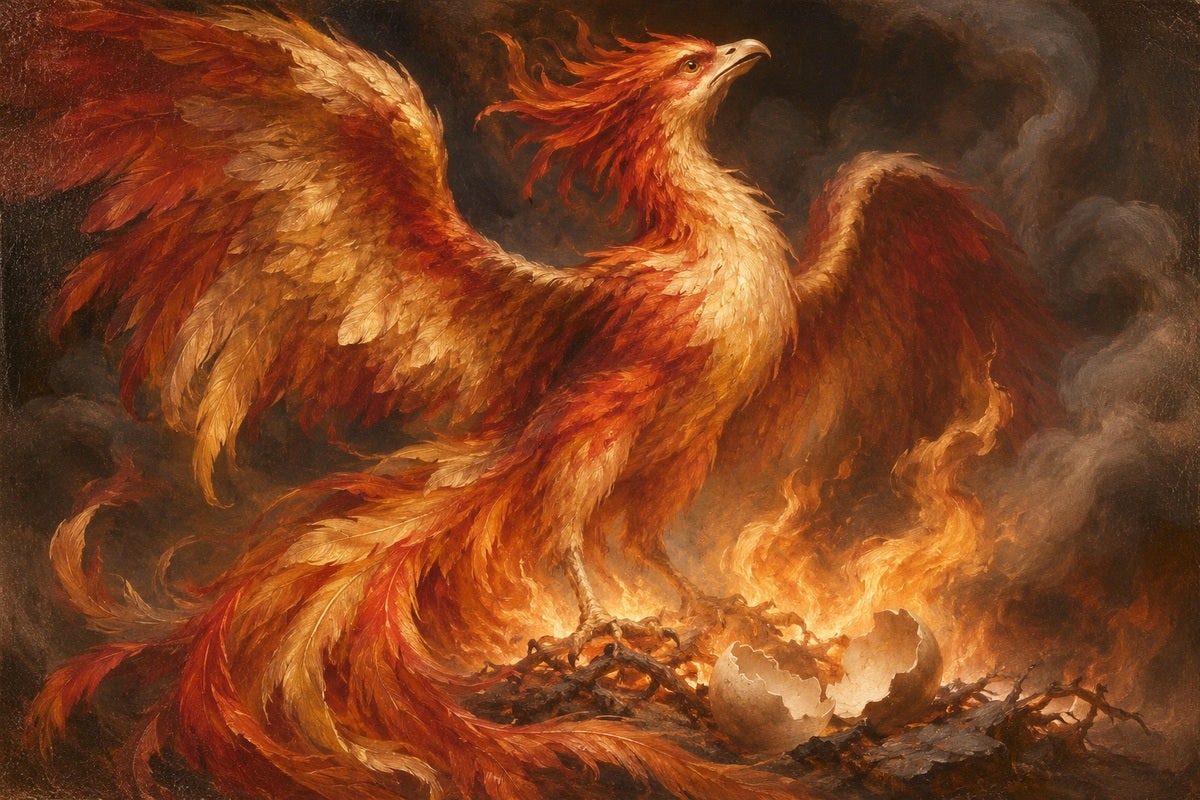
Its large wings enveloped in blazing flames and its vivid red and golden feathers are incorporated into paintings, sculptures, accessories, and more.
The legend of the phoenix has a long history, passed down from beliefs associated with ancient Egypt to Greco-Roman literature and European religious art.
This article explains the meanings and symbolism of the phoenix, its mythological origins, and the history of the legend of its resurrection from fire.
What Is the Phoenix? A Legendary Immortal Bird Reborn from Fire

The phoenix (Phoenix) is a legendary bird from the ancient Mediterranean world. In Japan, it is also known as a "fushicho" (immortal bird).
It is known for its long lifespan and the legend that a new phoenix is born when its life ends.
Today, it is widely known for burning its own body in fire and being reborn as a new life from its ashes.
Therefore, the phoenix is not merely a bird that does not die, but a being that symbolizes something that has come to an end being born anew.
The Meanings Symbolized by the Phoenix
From its legend of repeating death and regeneration, the phoenix has given rise to various symbolic meanings.
Resurrection and Regeneration
The most representative meanings of the phoenix are resurrection and regeneration.
The legend that an old life ends and a new life is born expresses the idea that death is not necessarily a complete end.
Even today, it is used as a motif representing overcoming failure and hardship to recover, or a new beginning.
Immortality and Eternal Life
Because a new individual is said to be born even when the phoenix reaches the end of its lifespan, it is also associated with immortality and eternal life.
Its immortality is expressed not as a single life living forever, but as life being passed down by repeating death and birth.
Hope and New Beginnings
The image of the phoenix being born again from ashes is also cherished as representing hope and new beginnings.
The story of being born again after burning out can be associated with turning points in life and new starts.
| Symbolic Meaning | Relationship with the Legend |
|---|---|
| Resurrection and Regeneration | Being born anew after its life ends |
| Immortality and Eternal Life | Repeating death and birth, and life continuing |
| Hope and New Beginnings | New life being born again from an end |
The Origins of the Phoenix and the Legends of Ancient Egypt
Important in tracing the history of the phoenix is the sun worship of ancient Egypt.
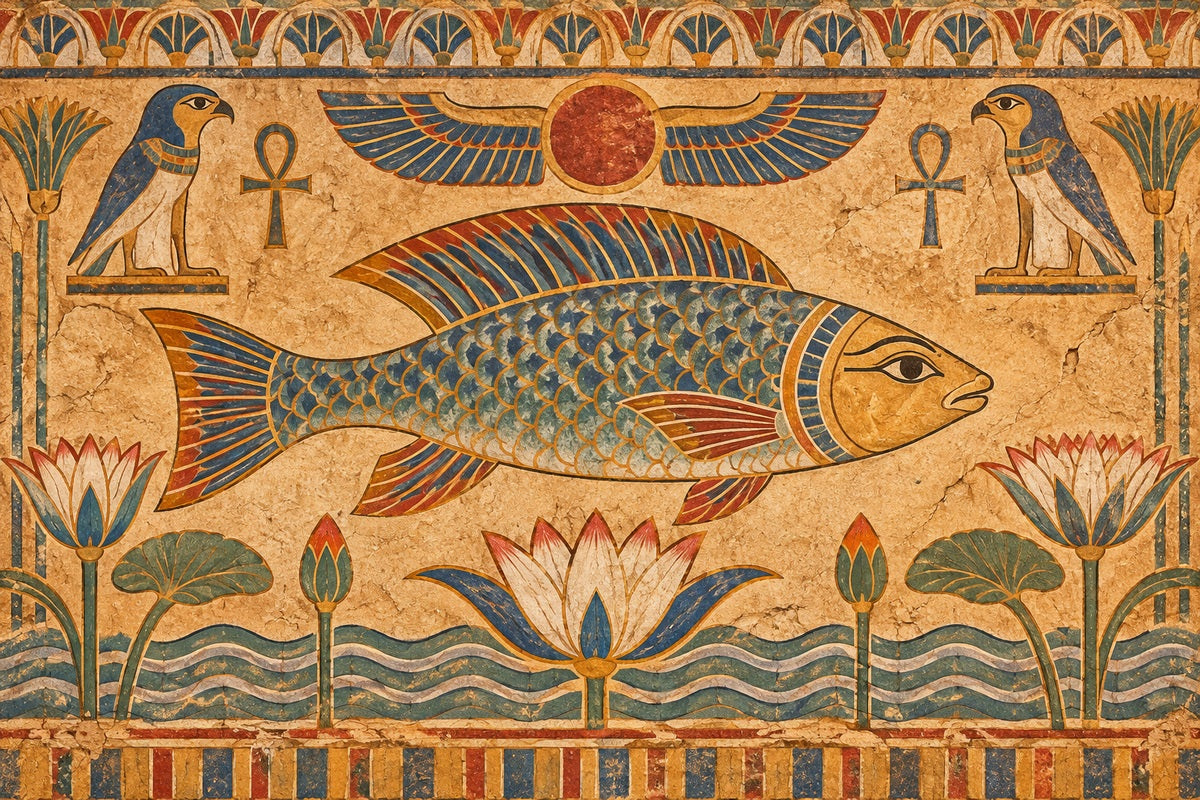
In ancient Egypt, a sacred bird called Bennu appears.
Bennu is a being associated with the sun god, creation, and regeneration, and played an important role in ancient Egyptian religion.
The phoenix told in the Greco-Roman world is associated with the tradition of this Egyptian sacred bird.
The Bird Appearing Once Every 500 Years Recorded by Herodotus
In the 5th century BC, the Greek historian Herodotus wrote about the phoenix in Book 2, Section 73 of his work, "Histories".
According to that description, the people of Heliopolis in Egypt said that the phoenix appeared once every 500 years.
The bird was said to resemble an eagle, with part of its feathers being golden and other parts being red.
Also, it is introduced that when the parent bird dies, a new phoenix wraps the parent bird's body in a spice called myrrh and carries it to the temple of the sun.
Herodotus himself had never seen a real phoenix and recorded it as a story he had heard.
The Phoenix Myth Developed in Ancient Greece and Rome
The legend of the phoenix was also passed down in Greco-Roman literature.
The ancient Roman poet Ovid writes about the phoenix that creates its own new life in Book 15 of "Metamorphoses".
In this story, when the phoenix finishes its 500-year lifespan, it gathers aromatic wood and spices to make a nest and ends its life inside it.
And it is said that a new phoenix is born from the dead bird's body, and after growing up, it carries the parent bird's remains to the temple of the sun.
Through such stories, the phoenix came to be depicted as a special bird that repeats death and regeneration.
Why Does the Phoenix Revive from Fire?
The current phoenix is known for being enveloped in fire, burning out, and being reborn again from ashes.
This connection between fire and regeneration became stronger as the legend developed from ancient times to the Middle Ages.
In Herodotus's records, the story of carrying the parent bird's remains to the temple of the sun is central, and the scene of resurrection from fire is not depicted.
Later in Europe, the legend of setting itself on fire and then being born again spread.
The Immortal Bird Appearing in Medieval European Bestiaries
In medieval Europe, "bestiaries" (animal allegories) were produced, introducing real animals and legendary creatures, and giving each religious meaning.
The phoenix also appears in these.
In the "Bestiary of the Workshop" produced around the late 12th century, the phoenix gathering spices to prepare for cremation and its form resurrecting from fire are depicted.
Through such medieval stories and artworks, the image of the immortal bird resurrecting with fire was passed down.
The Phoenix as a Symbol of Resurrection in Christian Art
The story of the phoenix's death and regeneration came to have a special meaning in Christianity as well.
In Christian art, the resurrection of the phoenix is associated with the resurrection of Jesus Christ and used as a religious symbol.
In the Italian painting "Faith, Charity, Hope" produced around the late 15th to early 16th century, the phoenix is also depicted as a bird symbolizing Christ's resurrection.
The phoenix expanded from a mythological creature to a motif expressing religious hope and the regeneration of life.
The Difference Between the Phoenix and the Chinese Phoenix
In Japan, the phoenix is called a "fushicho" (immortal bird), and it is sometimes treated as the same bird as the Eastern "Hōō" (Chinese phoenix).
Both are legendary birds, but there are differences in their cultural backgrounds and symbolic meanings.
The phoenix is a bird from the ancient Mediterranean world that repeats death and regeneration.
On the other hand, the Hōō is a sacred bird that appears in ancient Chinese culture and is associated with peace, prosperity, and virtuous rule.
In English, the Hōō is sometimes expressed as the "Chinese Phoenix", but it is a legendary being different from the Western phoenix.
| Comparison Item | Phoenix | Chinese Phoenix |
|---|---|---|
| Cultural Background | Ancient Egypt, Greece, Rome | Ancient Chinese Culture |
| Main Meaning | Resurrection, Regeneration, Immortality | Peace, Prosperity, Virtue |
| Legend Characteristics | Repeats death and regeneration | Appears in peaceful and prosperous times |
| Expression in Art | Fire, Sun, Red and Golden Feathers | Gorgeous Feathers, Long Tail, Decorative Form |
Why the Phoenix Is Used in Jewelry and Accessories
The phoenix is not only attractive for its symbolic meaning, but also for its gorgeous form combining wings, feathers, and fire.
Its widely spread wings and long flowing tail feathers are suitable for symmetrical decorations and designs that utilize curves.
Also, from the meaning of resurrection and regeneration, it is used as a motif for accessories commemorating new beginnings and turning points in life.
In metalcraft, the overlapping of feathers and the curves of fire can be expressed through carving.
At IMULTA, we perform hand-engraved metalwork, directly carving patterns into the surface of the metal. We also produce silver accessories that utilize the curves of flora and fauna and fine decorations.
View IMULTA Hand-Engraved Metalwork Accessories
Summary | The Phoenix is a Legendary Bird Symbolizing Resurrection and Regeneration
The phoenix is a legendary bird that has been passed down from traditions associated with ancient Egypt to Greco-Roman literature and medieval European religious art.
The story of a new life being born after a long lifespan eventually became associated with resurrection from fire and ashes, and spread as a symbol of regeneration and immortality.
Its image contains the meaning of the end of life and a new beginning.
Even today, the phoenix is incorporated into various arts and designs as a motif symbolizing recovery from hardship, new challenges, and hope.