

The Spirit of the Renaissance Expressed through Plant Motifs: Nature and Symbolism in Decorative Arts
Renaissance and the Gaze on Nature

As its name "Rinascimento" suggests, the Renaissance was a cultural movement that re-evaluated the ideas and aesthetics of ancient Greece and Rome, bringing them to life in a new context.
Originating primarily in 15th-century Italy, this movement had a profound impact not only on painting, architecture, and scholarship, but also on decorative arts such as silversmithing, jewelry, and craftsmanship.
While medieval decoration tended toward abstraction, emphasizing symbolism and religious devotion, the Renaissance placed greater importance on the observation of the natural world, faithfully reproducing details such as veins, petals, and fruit.
Among these, "plant motifs" occupied a central position in Renaissance decorative art as an expression that fused natural observation with symbolism.
Inheriting the Classics ― The Revival of the Acanthus Motif
The most representative plant motif of the Renaissance is the acanthus, which has traditions dating back to antiquity. Adorning the Corinthian capitals of ancient Greece, these leaves symbolized vitality and order in classical architecture.
Acanthus, which had been simplified and stylized in medieval decoration, was once again rendered in a realistic form based on natural observation during the Renaissance.
The curves of the leaves and every individual vein were intricately engraved, bringing vitality to metalwork and architectural decoration.
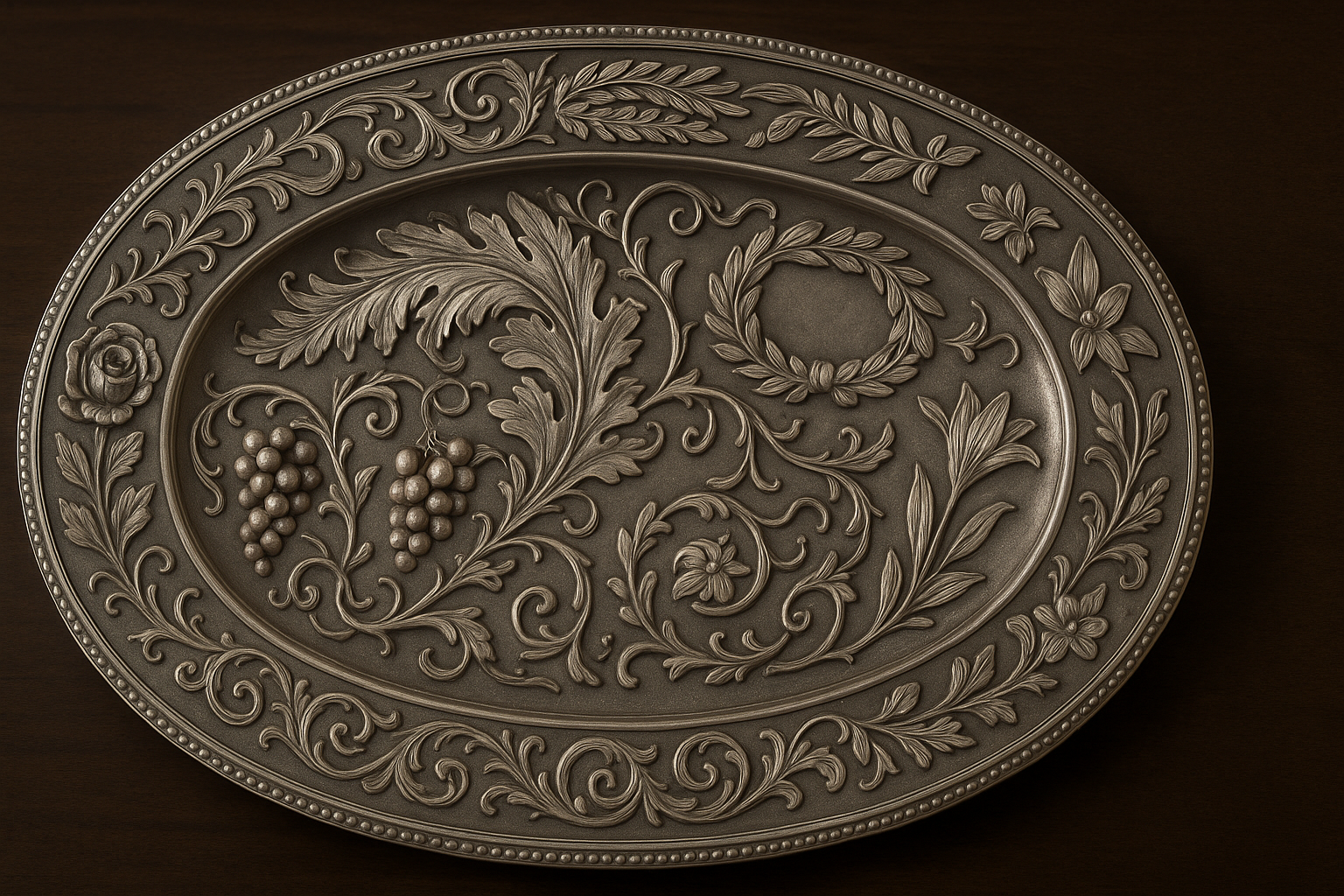
Acanthus decoration, particularly on silver products such as large platters, liturgical vessels, and candlesticks, embodied both the solemnity of the church and the vitality of nature, symbolizing the very foundation of Renaissance aesthetics: the "idealization of nature."
Life and Abundance ― Grapevine Motifs
Grapevines are a frequently recurring motif in Renaissance decoration. In Christianity, wine symbolizes the "blood of Christ," giving the motif religious significance, while it was also used since antiquity as a symbol of "abundance" and "vitality."
Grapevines engraved on silver vessels and ritual objects express the "harmony of nature" through compositions that intertwine intricately while maintaining order.
The finely detailed clusters and the movement of the vines reproduced painterly expressions on metal, creating designs that combined artistry with symbolism.
For Renaissance people, the grape was regarded as a link between the celestial (the divine) and the terrestrial (life), appearing in all contexts from everyday items to religious vessels.
The Symbolism of Renaissance Flowers ― Roses, Laurel Wreaths, and Lilies
In Renaissance decoration, flowers were also used as important symbols.
- Rose: Symbolizing love, beauty, and the Virgin Mary, it was frequently used in altarpieces and jewelry.
- Laurel Wreath: A symbol of victory and honor, it was associated with the ideal of the ancient poet and the spirit of humanism.
- Lily: A symbol of purity, royalty, and the Virgin Mary, it was also used in the coat of arms of the Republic of Florence.
These flowers functioned not merely as decoration, but as designs that embodied ideas, reflecting the Renaissance spirit of fusing the reproduction of nature with symbolism.
Renaissance Decorative Beauty Born of Workshops and Techniques
The sophisticated expression of plant motifs was supported by technological innovations and the development of the workshop system. Silversmiths and jewelers belonged to guilds, and their techniques were passed down and refined through long-standing apprenticeship systems.
Representative techniques include the following:
- Intricate Carving: Precisely engraving acanthus and grapevines onto metal surfaces.
- Niello: Pouring a black alloy into engraved grooves to accentuate the design.
- Enamelwork: Enabling the expression of the colors of flowers and fruit.
Through the fusion of such techniques and creativity, Renaissance crafts achieved a high level of perfection as "art born from the collaboration of nature and humanity."
Interaction with Other Fields ― Plant Motifs as a Comprehensive Art
Plant motifs were not limited to the decoration of crafts but were also closely related to other fields such as architecture, painting, and manuscript illumination.
Acanthus carved on capitals and walls was applied to metalwork and repurposed for picture frames and decorative backgrounds, spreading the motif across various fields.
This interaction embodies the Renaissance idea of viewing art as a "comprehensive cultural expression."
Renaissance Plant Motifs Living in the Modern World
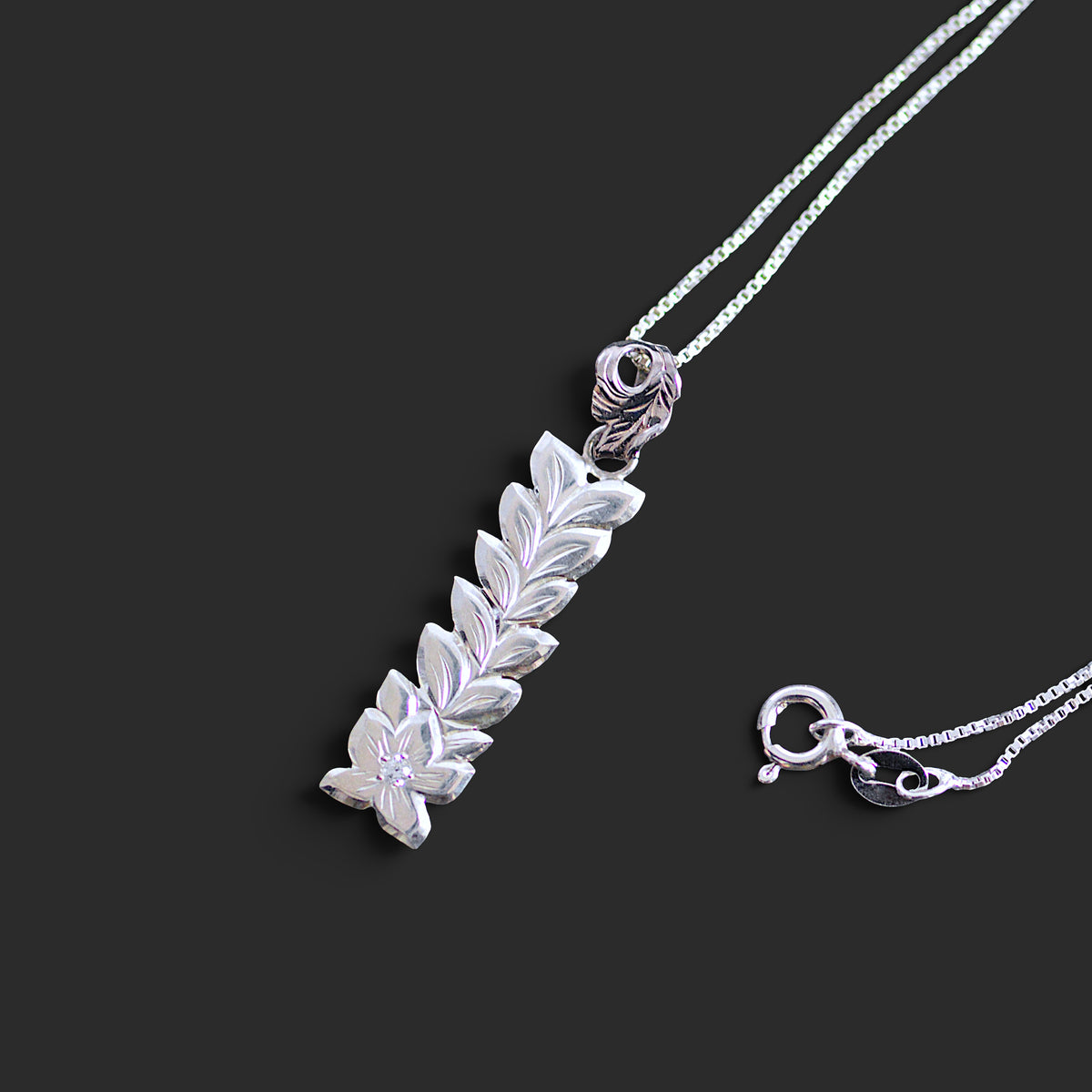
Renaissance plant motifs continue to live on in today's jewelry and decorative design.
Acanthus and arabesque patterns have been passed down to modern silver accessories, while grapevines influenced later decorative styles such as Art Nouveau.
Roses and laurel wreaths continue to be widely used as symbols of love, victory, and purity.
This tradition shows that Renaissance plant motifs are not merely a legacy of the past, but a "universal decorative language connected to modern aesthetics."

Conclusion
Renaissance plant motifs were born from the reinterpretation of the classics and the results of natural observation, developing into artistic expressions imbued with religious and symbolic meanings.
They became a common design language pervading not only metalwork but also architecture, painting, and the decorative arts as a whole, forming the foundation of the decorative beauty that continues to this day.


