
The meaning and origin of the dove motif: Symbolism and cultural background of the decoration

Doves appear in cultures, religions, and decorative arts around the world, carrying symbolic meanings such as peace, purity, love, and the Holy Spirit.
This article explores the historical background of the dove motif and its interpretations across different cultures, offering inspiration for incorporating it into decoration and design.
Ancient Origins

Mesopotamia and the Mediterranean World
- In ancient Mesopotamia, the dove was considered a symbol of the goddess Ishtar, the goddess of love and fertility.
- In ancient Greece, it was regarded as the sacred bird of the goddess Aphrodite (known as Venus in Rome), symbolizing love and beauty.
The Roman Empire
- Doves were depicted in mosaics and decorative objects, representing domestic tranquility and marital love.
Religious Significance
Christianity
- In the New Testament, the dove appears as a symbol of the Holy Spirit.
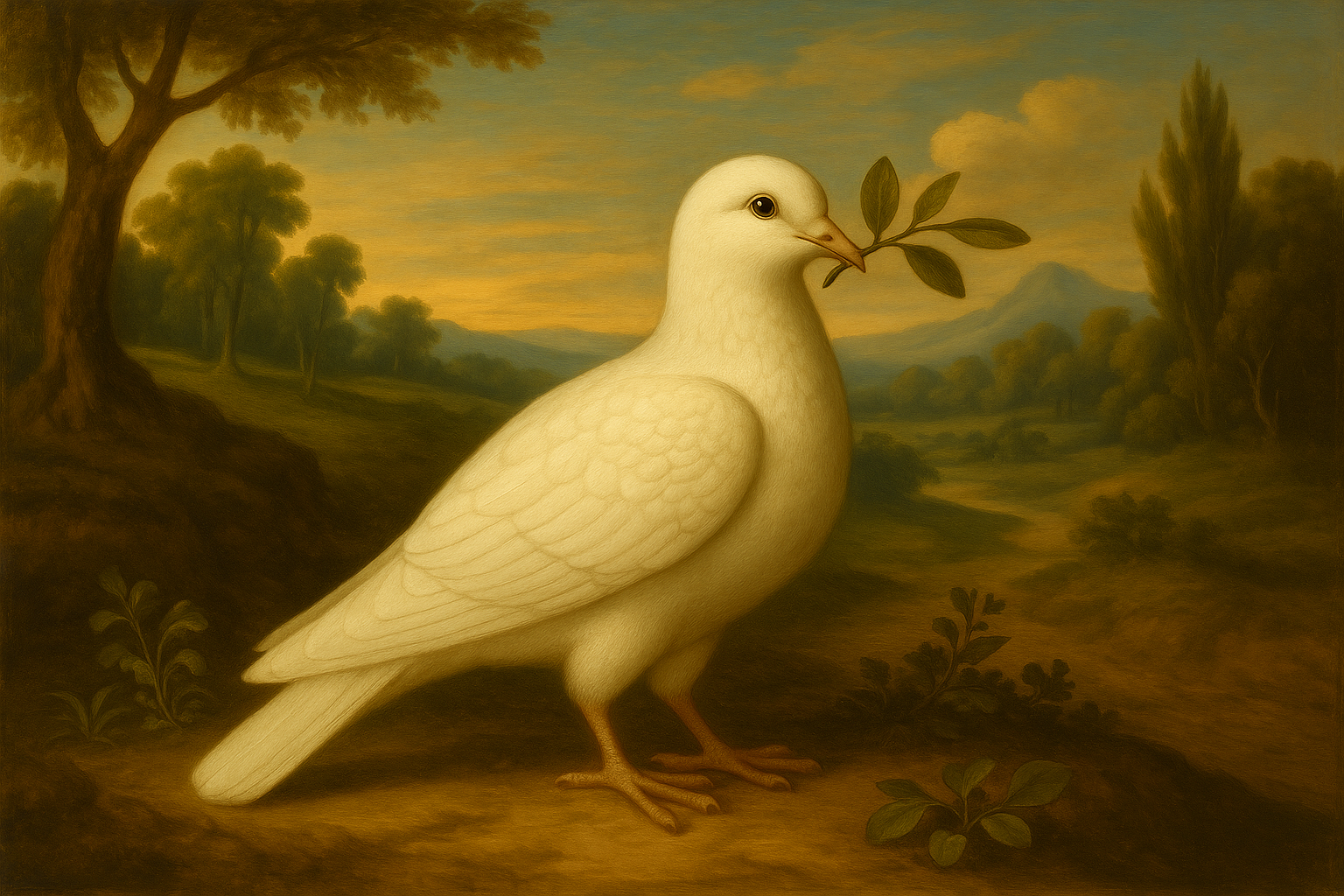
- In the story of Noah's Ark, a dove carrying an olive branch announces the end of the flood and the arrival of peace.
White doves are also said to represent the pure souls of the deceased resting in paradise.
Islamic Culture
- It is revered as the bird that protected the Prophet Muhammad, symbolizing purity and protection.
Doves in European Decoration
- Depicted in medieval tapestries and stained glass, symbolizing purity and compassion.
- Since the 19th century, it has also become widely recognized as a symbol of peace movements.
Doves in East Asia (Primarily Japan)
The Dove as a Messenger of Hachiman
- It is considered a messenger of Hachiman (Emperor Ojin), particularly symbolizing victory, protection, and guidance.
- Legend has it that a white dove showed the way when Empress Jingū led troops to Korea.
- Dove designs are frequently used in Hachiman shrine crests, banners, and votive tablets.
Buddhist Symbolism
- Doves are considered birds that dislike killing, symbolizing compassion and non-violence.
- They are depicted as beings protected within temple gardens and grounds.
Symbol of Marital Harmony and Domestic Peace
- A pair of doves represents marital harmony and peace within the home.
- The motif was also incorporated into local toys and wedding items during the Edo period.
A Modern Symbol of Peace
- After World War II, the dove carrying an olive branch became widely recognized as a global symbol of peace.
- The image of "peace = dove" has become established even among generations without a religious background.
Summary of Key Meanings in Decoration
| Symbolizes | Background |
|---|---|
| Peace | Noah's Ark and the olive branch, post-war peace movements |
| Purity | White feathers, symbol of the Holy Spirit |
| Love and beauty | Sacred bird of Aphrodite, marital love |
| Holy Spirit | Symbol of the Spirit of God in Christianity |
| Sacred messenger | Dove as a messenger of Hachiman |
| Guidance | Legend of Empress Jingū |

Summary
The dove motif is a universal design widely used in everything from religious symbolism to peace movements.
In Japan especially, it carries strong connotations of victory, protection, and guidance rooted in the Hachiman faith. In jewelry and metalwork, its fluttering form and combination with olive branches are popular motifs.