
What Was Late 1990s Amekaji? From the Vintage Boom to Ura-Harajuku and Silver Accessories
In Japan in the late 1990s, a wide range of fashion styles, including vintage denim, secondhand clothing, sneakers, and Ura-Harajuku street brands, was gaining attention among young people.
American casual (Amekaji) was one of them. In addition to staple items such as jeans, flannel shirts, sweatshirts, and work boots, it was becoming increasingly popular to search for vintage American clothing or choose replica jeans that recreated past manufacturing methods.
Meanwhile, during the same period in Harajuku, a unique style of street fashion combining American casual elements with music, skating, and graphics was emerging.
This article looks back at Amekaji in the late 1990s, as well as the popular items and leading brands of the time, its relationship with Ura-Harajuku, and the popularity of silver accessories.
What Was Amekaji in the Late 1990s? Key Features of Fashion at the Time

To understand Amekaji in the late 1990s, it is essential to consider the interest in vintage secondhand clothing and the emergence of Japanese brands that sought to recreate American clothing.
Fashion magazines featured vintage Levi’s jeans, American-made sweatshirts, military jackets, and work boots in detail.
The key features of fashion at the time can be summarized as follows:
- Vintage secondhand clothing:Vintage Levi’s, sweatshirts, and military wear attracted attention.
- Replica jeans:Japanese brands that recreated the fabrics, construction, and fading of vintage jeans grew in popularity.
- Workwear style:Outfits featuring denim, coveralls, and work boots.
- Military style:Military jackets and cargo pants worn as casual wear.
- Sneaker culture:High-tech sneakers, exemplified by the Air Max 95, became a major topic of conversation.
- Connection with Ura-Harajuku:Street brand T-shirts and hoodies were paired with vintage denim and other items.
Amekaji during this era was not just about wearing American clothing as it was; it was also a style that involved researching the value of vintage clothing and enjoying it by pairing it with clothing from different genres.
While military-inspired fashion was popular, cargo pants suddenly became a trend, leading to a surge in sales of bottoms covered in pockets, along with many other eccentric items driven by the trends of the time.
From Shibukaji to Late-1990s Amekaji | What Changed
In the history of Amekaji in Japan, “Shibukaji” from the late 1980s to early 1990s is often highlighted.
Shibukaji was a style based on American casual fashion that spread primarily among young people around Shibuya.
Amekaji remained popular afterward, but in the late 1990s, new ways of enjoying it became more noticeable, including the rarity of vintage clothing, the quality of replica products, and combinations with street brands.
Comparing Shibukaji and Late-1990s Amekaji
| Comparison Item | Shibukaji Era | Late 1990s |
|---|---|---|
| Main Period | Late 1980s–early 1990s | Centered around 1995–1999 |
| Key Elements | Outfits based on American casual fashion | Combinations of vintage, replicas, secondhand clothing, and street fashion |
| Fashion Information Sources | Magazines, shops, and local trends | Magazines such as Boon, secondhand clothing stores, and brand shops |
| Key Interests | American casual style | Differences in specifications by era, rarity, and brand identity |
Both styles shared many common items, such as denim and boots. However, the late 1990s was a period when the enjoyment of Amekaji became even more diverse due to a particular focus on vintage clothing and the emergence of new brands.
Vintage Denim Boom | Old Jeans Become Objects of Desire
The popularity of vintage denim cannot be overlooked when discussing Amekaji in the 1990s.
Older Levi’s 501s and 501XXs began to attract attention for their manufacturing dates and specifications.
Rather than viewing jeans simply as everyday wear, people began to research when they were made and what fabrics and components they used.
Focus on Red Selvedge, Big E, and Fading
Along with the popularity of vintage denim, interest grew in the knowledge needed to identify the specifications of vintage jeans.
- Red selvedge:A selvedge finish using red thread visible at the edge of the fabric.
- Big E:One of the distinctive features of the lettering on Levi’s red tabs.
- Fading:The variations in indigo color and wear created by years of use.
- Construction:Detailed specifications such as stitching, pockets, and buttons.
- Era:Details that differ depending on the manufacturing period, even for the same model.
These subtle differences were also covered in detail in vintage features in magazines.
Members of popular boy bands at the time even explained these features in detail on television programs.
Why Vintage Jeans Were So Highly Valued
Vintage jeans were valued for their rarity, which depended on their manufacturing date and condition.
The unique character of each pair, such as fading and wear created by years of use, was also highly valued.
In the 1990s, vintage jeans became increasingly rare and valuable, and the prices of secondhand clothing rose as well.
This market trend also contributed to the growth of Japanese replica jean brands.
Popularity of Replica Jeans | An Era of Growth for Japanese Amekaji Brands
In the 1990s, Japanese brands that studied vintage American jeans and sought to recreate the fabrics and construction of the era attracted attention.
Many vintage jeans were rare and expensive, so replica jeans, which allowed people to enjoy vintage denim in new pairs, also became popular.
Leading Japanese Replica Jean Brands
| Brand | Founded | Features |
|---|---|---|
| STUDIO D’ARTISAN | 1979 | One of the leading brands of early Japanese-made replica denim |
| DENIME | 1988 | Denim production inspired by vintage Levi’s |
| EVISU | 1991 | Focus on vintage specifications and the seagull logo |
| FULLCOUNT | 1992 | Pursuit of vintage texture and comfort |
| WAREHOUSE | 1995 | Research into vintage clothing specifications, including thread, fabric, and construction |
These brands did not simply aim to replicate the appearance of vintage clothing.
They also placed great importance on recreating the characteristics of vintage clothing, such as the texture of the fabric, the construction, and the way it faded with wear.
This uniquely Japanese focus on the details of denim was an essential element of Amekaji in the 1990s.

Popular Clothing and Footwear in Late-1990s Amekaji
In Amekaji during this period, vintage American clothing, workwear, and sneakers also attracted attention alongside jeans.
Magazines featured vintage denim as well as sweatshirts, T-shirts, military outerwear, and work boots.
Key Fashion Items
- Vintage denim:Jeans such as vintage Levi’s, valued for their era and fading.
- Sweatshirts:Designs typical of vintage American clothing, such as Champion college prints.
- Flannel shirts:A staple of Amekaji, featuring plaid patterns.
- Work jackets:Clothing based on workwear, such as coveralls and denim jackets.
- Military wear:Military jackets and cargo pants.
- Work boots:Boots associated with American workwear, such as Red Wing.
- Sneakers:Vintage models from brands such as Nike and new models that became popular at the time.
Air Max 95 and the Sneaker Boom
Sneakers also became hugely popular in Japan from the mid-to-late 1990s.
The Air Max 95, released by Nike in 1995, became an icon of this trend.
Its distinctive design and growing popularity led to it being traded at premium prices, and by around 1996–1997, it had become a symbol of the sneaker boom.
It became so popular that incidents known as “Air Max hunting” occurred.
The fact that the culture of searching for vintage secondhand clothing and the pursuit of rare new sneakers appeared together in fashion magazines and shops during the same 1990s was another characteristic of this era.
The Emergence of Ura-Harajuku Fashion | The Intersection of Amekaji and Street Fashion
Ura-Harajuku fashion was also essential to men’s fashion in the late 1990s.
Ura-Harajuku refers to the side streets around the main thoroughfare of Harajuku.
Street brand shops gathered there in the early 1990s, and from the mid-1990s onward, Ura-Hara fashion began to attract attention.
Leading Ura-Harajuku Brands
Leading brands included the following:
- GOODENOUGH:A leading Ura-Harajuku street fashion brand involving Hiroshi Fujiwara.
- A BATHING APE:A brand founded by NIGO, known for graphic T-shirts and camouflage patterns.
- UNDERCOVER:A brand founded by Jun Takahashi that connected fashion with subcultures such as punk.
- NEIGHBORHOOD:A brand incorporating elements of biker and military styles.
In 1993, NOWHERE, a shop founded by NIGO and Jun Takahashi, opened in Harajuku.
Ura-Harajuku brands were closely linked to music and graphics, and their popularity spread through magazines and shops.
How Ura-Hara and Amekaji Were Connected
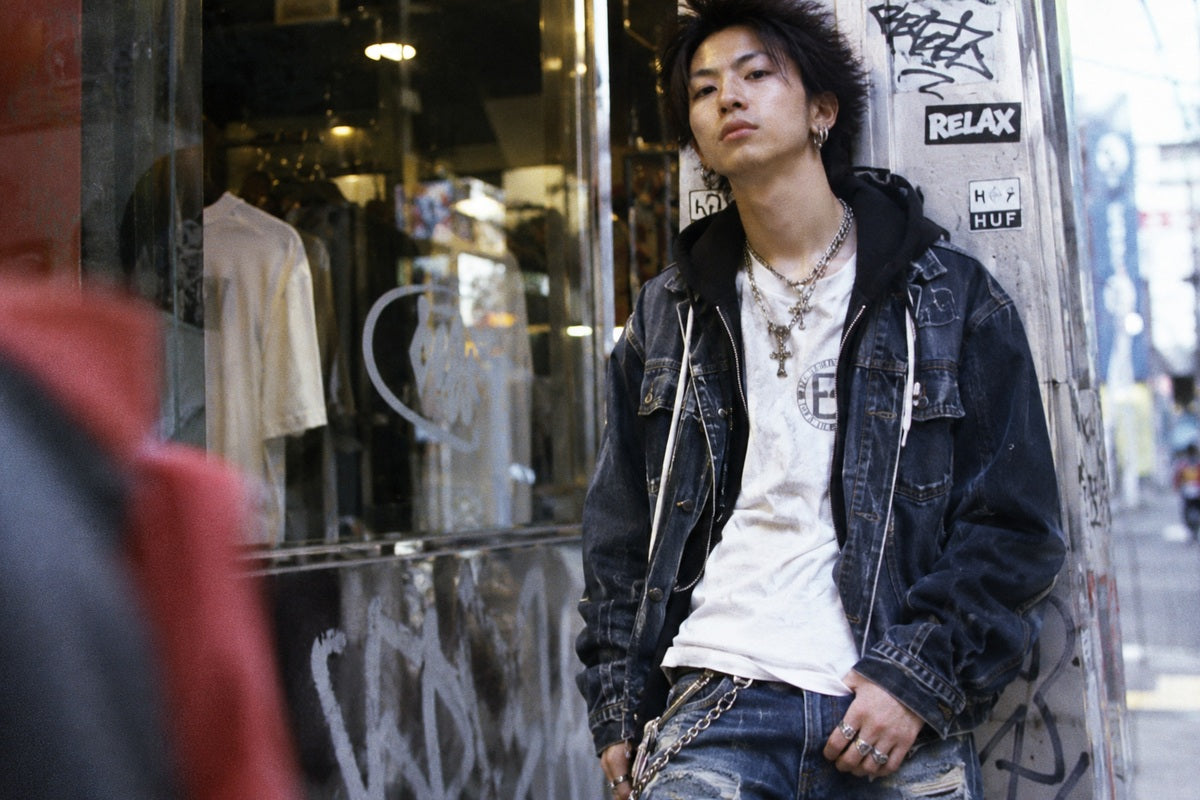
While Ura-Hara was not Amekaji itself, many of the same items were used in its outfits.
For example, Ura-Hara brand T-shirts and hoodies were paired with vintage denim.
Fashion articles looking back at the time also featured outfits combining Ura-Hara brand tops with vintage Levi’s jeans.
It was an era when people enjoyed combining different genres, including secondhand clothing, workwear, military wear, sneakers, and street brands.
Fashion Magazines Showcased 1990s Amekaji
Fashion magazines had a major influence on men’s fashion in the 1990s.
In addition to features on vintage denim and sneakers, they also provided information on popular secondhand clothing shops and Ura-Harajuku street fashion.
The magazines people read varied depending on their fashion preferences, and some friends bought about three copies.
While there are likely still young people who buy large quantities of fashion magazines today, magazines were the dominant medium at the time, and people rarely searched for information online. Almost everything imaginable was published.
Color mobile phones were introduced around 2000, so the internet was not yet very common.
Knowledge of How to Choose Clothing Also Became Fashion
Magazines provided detailed information on how to identify the manufacturing dates of vintage denim, as well as the differences between sweatshirts, T-shirts, and military wear.
Special editions featuring jeans were published in 1995, followed by editions on T-shirts and sweatshirts in 1997.
Not only did people look for clothing that suited their tastes, but researching its era, specifications, and brand background was also part of the enjoyment of fashion at the time.
Major Fashion Trends in the 1990s
| Era | Key Trends |
|---|---|
| Late 1980s–early 1990s | Interest in Shibukaji and vintage secondhand clothing spreads |
| 1991–1995 | Denim brands such as EVISU, FULLCOUNT, and WAREHOUSE emerge |
| 1993 | NOWHERE opens in Harajuku |
| Around 1995–1997 | Vintage secondhand clothing, Ura-Hara fashion, and high-tech sneakers attract attention |
| Late 1990s | Ura-Hara brands spread, and silver accessories also gain popularity |
| Early 2000s | Ura-Hara culture continues to attract attention, and diverse Amekaji and street styles persist |
The Late-1990s Silver Accessory Boom
The late 1990s was also a period when silver accessories attracted attention in Japanese men’s fashion.
At the time, people paired jeans and leather jackets with distinctive silver rings and pendants.
The Presence of Chrome Hearts and Goro’s
Chrome Hearts and Goro’s are leading brands of silver accessories from the 1990s.
Chrome Hearts is an American brand that offers leather products and silver accessories. It also gained popularity in Japan in the 1990s and became known through its use by celebrities.
Goro’s, on the other hand, is a brand based in Harajuku that is known for accessories featuring feathers and other materials. It has also been associated with Amekaji and Ura-Harajuku street fashion.
Interviews with retailers at the time also described Chrome Hearts as being associated with luxury and high fashion, while Goro’s was linked to Amekaji and Ura-Hara street fashion.
The cover of almost every silver accessory book at the time featured Chrome Hearts.
How Silver Accessories Were Paired with Different Styles
Silver accessories were not limited to a single style.
They were incorporated into a variety of styles, including Amekaji, biker, rock, and street fashion.
| Fashion Style | Clothing Examples | Example Accessory Combinations |
|---|---|---|
| Vintage Amekaji | Denim, sweatshirts, work boots | Silver rings, pendants |
| Biker | Leather jackets, denim, boots | Heavy rings, chains, pendants |
| Rock | Leather, black T-shirts, slim pants | Decorative rings, pendants |
| Ura-Hara Street | Graphic T-shirts, hoodies, denim | Silver rings, feather pendants |
These differences in style were also reflected in the choice of silver accessory designs.
For example, the impression created by accessories differed depending on whether they were paired with engraved rings and denim or leather, or with large pendants and simple clothing.
Amekaji and Street Fashion Continuing into the Early 2000s
Vintage denim and Ura-Harajuku brands that attracted attention in the late 1990s also influenced fashion in the early 2000s.
Meanwhile, the popularity of Ura-Hara brands changed around the turn of the millennium, and fashion trends became even more diverse.
Even so, Amekaji staples such as jeans, sweatshirts, work boots, and leather jackets continued to be worn in men’s fashion afterward.
When looking back at fashion in the late 1990s, it is important not only to list the popular brands of the time but also to see how secondhand clothing, street fashion, music, and other cultures coexisted.
If You Want to Incorporate Late-1990s Amekaji Today
Even when incorporating Amekaji from the late 1990s into current outfits, the basic items remain largely the same.
You can center your look around vintage-style denim, sweatshirts, leather, and work boots, and combine them according to your preferences.
Examples of Outfits Inspired by Late-1990s Amekaji
- Denim and sweatshirts:A simple combination typical of vintage Amekaji.
- Denim and leather jackets:A style centered on heavy outerwear.
- Flannel shirts and work boots:An outfit inspired by American workwear.
- Graphic T-shirts and denim:A combination reminiscent of Ura-Hara street fashion.
- Simple clothing and silver rings:An outfit that highlights the design of the accessories.
It may sound harsh, but Amekaji combinations and outfits have been covered to death.
So many different outfits, including accessories, had been featured that it may be difficult to find something new, but looking through old fashion magazines at a used bookstore might reveal unique combinations that differ from those of today.
Regardless of whether they are stylish or not, street snaps from the 1990s still feel full of sensibilities that are no longer around today.
Silver Accessories to Pair with Amekaji
Fashion in the late 1990s featured many outfits that showcased the textures of materials such as vintage denim and leather.
Even today, silver rings and pendants can be paired with such outfits.
In particular, rings with plant motifs or intricate decorations on their metal surfaces are accessories that allow you to enjoy the patterns and texture of the metal even with a simple denim style.
IMULTA creates silver accessories using hand-engraved metalwork to carve plant motifs such as arabesques into the metal.
If you are looking for accessories to pair with vintage Amekaji or leather jackets, choosing based on the shape of the decoration or the fineness of the engraving is one approach.

Summary | Late-1990s Amekaji Was an Era Where Secondhand Clothing and Street Fashion Intersected
Amekaji in Japan in the late 1990s expanded in many directions against a backdrop of popular vintage secondhand clothing and replica jeans.
The culture of researching the manufacturing dates and specifications of vintage Levi’s, the growth of Japanese replica jean brands, the sneaker boom, and the emergence of street brands centered in Ura-Harajuku were defining events of fashion at the time.
At the same time, silver accessories also attracted attention and were incorporated into different styles, including Amekaji, rock, and street fashion.
Amekaji in the late 1990s was not just about wearing vintage American clothing; it was also a style that involved learning about the value of vintage clothing and the history of brands, and enjoying your own unique combinations.